


 Deutsch
 English
 Español
 Français
 Nederlands
 Português


 Share
Share




Spanish police began clearing the last remaining Ceuta migrant beach camp on Sunday morning, deploying 350 officers to remove an estimated 3,000 people from El Trampolín beach. The operation, which started at 08:00 local time, is part of a large-scale push to relocate migrants and restore order in the Spanish exclave on North Africa's Mediterranean coast.
What Is Behind the Ceuta Migrant Crisis?
Ceuta and Melilla are Spain's only land borders with Africa and have long been focal points for migration into the European Union. The current crisis erupted in late July 2026, when an estimated 80,000 people—mainly young men from Morocco—crossed into Ceuta, overwhelming reception facilities. While most later returned voluntarily, thousands remain on beaches, streets, and in shelters. The situation has also been shaped by EU border migration policy and Spain's January 2026 mass regularisation programme, which critics say acted as a pull factor.
How Spanish Police Cleared the El Trampolín Camp
350 Officers, Divers, and Boats
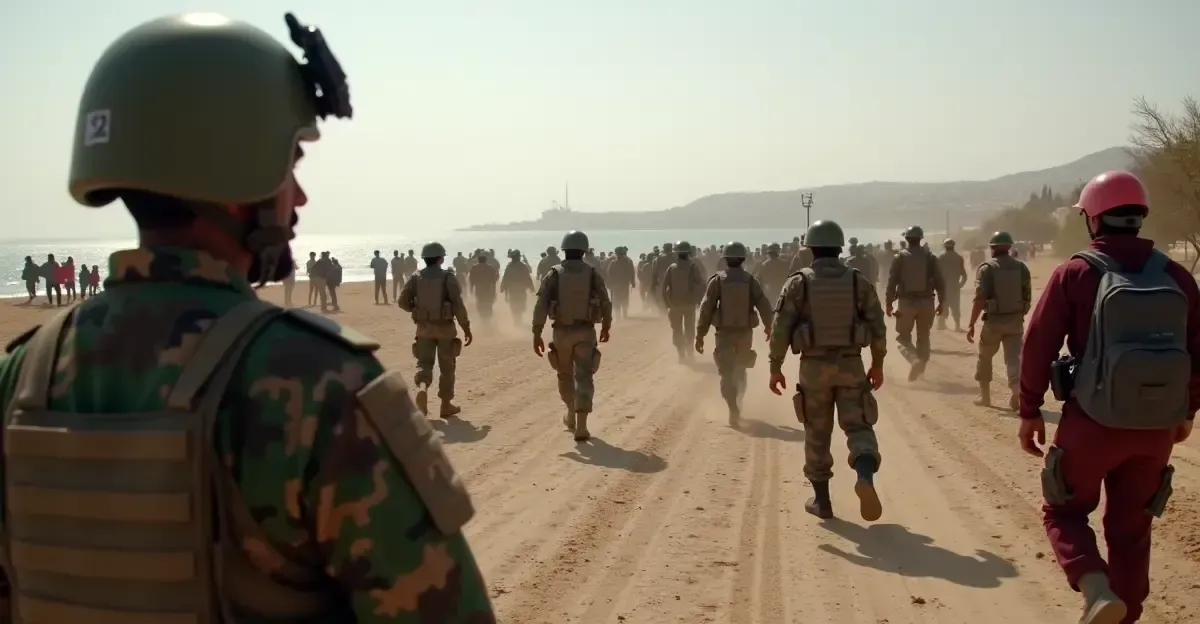
The evacuation involved 350 agents from the National Police and the military-style Guardia Civil. Guardia Civil deployed divers and three boats in case any migrant tried to escape by swimming, news agency EFE reported. 'The evacuation is proceeding without incidents,' police said.
Two Options for Migrants: Register or Return
Migrants are being taken to CATE, the temporary centre for foreigner assistance near the El Tarajal border crossing. There, each person faces two choices:
- Register and be placed in emergency shelter set up in the Spanish exclave.
- Return 'voluntarily' to Morocco.
| Option | What it means |
|---|---|
| Register in Spain | Migrant is documented and moved to emergency shelter in Ceuta |
| Return to Morocco | Migrant is labelled a 'voluntary' return, but conditions in Morocco remain difficult |
The operation mirrors earlier clearances at the nearby Benítez beach migrant camp, which was fully evacuated, but El Trampolín is considerably larger and more complex.
Health Risks: E. coli in the Water
Conditions at the camp had deteriorated sharply. Spanish newspaper El País reported that water at the beach was contaminated with E. coli bacteria, yet migrants were forced to keep bathing in the sea and washing kitchen utensils there. Local authorities had set a deadline of 15 October for the beach to be cleared.
Why the Timing Matters: Royal Visit and Politics
The clearance comes days before King Felipe VI and Queen Letizia are due to visit Ceuta and Melilla on 13–14 October, the first monarch visit since Juan Carlos I travelled there in 2007. The timing is sensitive because the Morocco Spain territorial dispute has resurfaced, with Moroccan officials recently restating that Ceuta and Melilla belong to Morocco. A royal visit could be read as a political statement, while skipping it risked appearing unsupportive of residents.
'Due to the large demonstrations around the housing crisis, the situation in Ceuta is getting less attention. Meanwhile, the situation on the streets of the exclave remains a major problem. With actions like this, police hope to get more grip on the situation,' an analyst said.
FAQ: Ceuta Migrant Beach Camp Clearance
How many migrants were on El Trampolín beach?
Authorities estimate around 3,000 migrants were living on El Trampolín beach before Sunday's clearance.
What options do migrants have after the clearance?
Migrants can register at the CATE centre and move to emergency shelter, or return 'voluntarily' to Morocco.
Why is Spain clearing the camp now?
The beach had to be cleared by 15 October, and the operation precedes a royal visit to Ceuta and Melilla on 13–14 October.
Is the water at the beach safe?
No. El País reported the water was contaminated with E. coli, yet migrants had continued bathing and washing utensils there.
What is CATE?
CATE is the temporary centre for foreigner assistance, located near the El Tarajal border crossing, where migrants are processed.


Follow Discussion